



How to Use Body Scrub (and What It’s Actually Doing to Your Skin)
| Estimated Reading Time: 6 minutes |
Somewhere between “I should take better care of my skin” and "Let me aggressively rub this sugar paste on my arms," body scrubs became an important part of our skincare routines.
Let’s admit it. We’ve all used one. We’ve all expected instant baby-soft skin. And we’ve all, at some point, wondered if we were just… scratching ourselves with expensive sand that comes in a fancy jar. (Don’t tell me it’s just me.)

But body exfoliation scrubs are not just about feeling smoother. Their roots are a mix of physical science, skin biology, and (interestingly) traditional practices that existed long before Instagram started influencing skincare routines.
Understanding how body scrubs work changes how you use them and, more importantly, what you expect from them.
|
Table of Contents: |
Why Scrubs Exist Alongside Body Washes
If body washes already “clean” your skin, why do scrubs even exist?
Because cleaning and exfoliating are two completely different jobs.
A body wash works at a chemical level. It uses surfactants to dissolve dirt, oil, sweat, and product build-up. Think of it as loosening and lifting what’s sitting on your skin.
A body exfoliation scrub, on the other hand, works at a physical level. It helps remove dead skin cells that don’t just wash away on their own.
Your skin sheds dead cells naturally, but not efficiently. These cells end up accumulating and may lead to the following:
-
Rough or uneven texture
-
Dull-looking skin
-
Clogged pores (especially on areas like the back and shoulders)
Like a superhero, a scrub steps in here where body washes stop. It doesn’t replace cleansing but is meant to complement it.

The Role of Friction, Pressure, and Time
In short, at its core, a body exfoliation scrub is based on friction.
Now, here's where it gets interesting. It's not about rubbing your skin at random and hoping for the best. Rather, there are three key elements that govern how well or poorly a scrub will perform or how badly it will harm your skin:
-
Friction: Friction is created by the scrubbing particles, which could be salt, sugar, coffee, powders, or even crushed plant matter, among others.These particles cause a mild friction that helps to dislodge dead skin cells from your skin's surface. The nature and size of these particles matter a lot. The more rounded and smooth they are, the better they will perform.
-
Pressure: More pressure is not necessarily better.In fact, too much pressure is likely to harm your skin's barrier function, causing irritation and even micro-tears. The idea is to help your skin shed naturally and not to forcibly remove skin cells. Light to moderate pressure is all you need for effective exfoliation.
-
Time: Time is the most underrated factor.You don’t need to scrub an area for five minutes straight. Over-exfoliating the same spot does more harm than good.A few gentle circular motions per area are sufficient. The process should feel like polishing and not like you’re sanding furniture (sorry, not sorry).
Why Scrubs Are Not Meant for Daily Use
It seems tempting to use body exfoliation scrubs every day, especially since the skin feels smoother immediately after.
But here’s the catch: your skin barrier needs time to recover.
Even if the exfoliation is done gently, it is still a form of controlled disruption. Daily scrubbing can lead to:
-
Increased sensitivity
-
Dryness or tightness
-
Compromised barrier function
-
Breakouts in some cases

Most skin types only require exfoliation 2-3 times a week. Maybe even less for sensitive skin.
More is not better.
Remember: consistency over frequency.
Ayurvedic Practice of Udwarthanam
Long before the advent of scrubs, Ayurveda already had its version of exfoliation, which is called Udwarthanam.
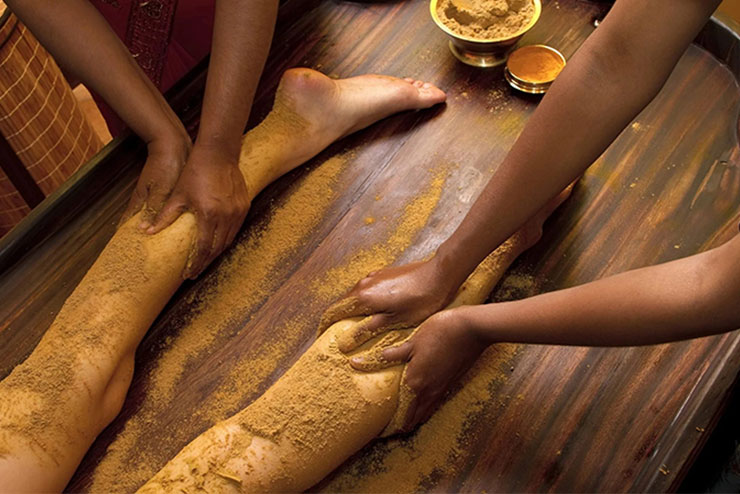
This is a traditional practice wherein the application of herbal powders is done by massaging the powders onto the skin in the direction of the body.
What Makes Udwarthanam Different?
Unlike scrubs, which are generally made of oil-based ingredients that can smoothly glide over the skin, Udwarthanam uses dry or lightly dampened powders.
This results in a more intense friction, which, together with the massage, can stimulate the flow of the blood.
Common Powders Used
The different kinds of herbal powders used depend on the intended outcome of the practice:
-
Besan (Gram Flour): For gentle exfoliation and cleansing.
-
Turmeric: Famous for its brightening properties.
-
Sandalwood Powder: Soothing and relaxing.
-
Triphala: Detoxifying and rejuvenating.
-
Neem Powder: Good for those with acne or irritated skin.
The powders can be mixed with water, milk, or herbal decoctions to form a paste.
Benefits of Udwarthanam
The practice of Udwarthanam is more than just exfoliation:
-
It improves the flow of the blood.
-
It helps the lymphatic system.
-
It improves the texture of the skin.
-
It helps in attaining a more even-toned look.
It’s also traditionally associated with detoxification and balancing certain doshas in Ayurveda.
Importance of Technique
The defining feature of udwarthanam is the upward, firm strokes rather than random circular motions.
This is believed to counteract heaviness in the body and stimulate energy flow, something which most modern scrubs don’t typically take into consideration.
Difference Between Polishing, Smoothing, and Refining (Decoding Marketing Lingo)
Let’s be honest. Skincare marketing loves a good poetic word.
The terms do have subtle differences, though:
Polishing:
This typically involves a more instant and noticeable change.
The appearance of the skin looks brighter, and its texture feels softer after application. This term is typically associated with products that have oils or tiny particles within the exfoliant, giving the skin a slight shine.
Smoothing:
A product with this term delivers texture over time.
The regular use of a body exfoliation scrub can help smooth out rough patches, resulting in softer skin overall.

Refining:
This term involves the most long-term and subtle change.
It involves improving the overall quality of the skin, giving it a more even appearance and eliminating dullness.
So no, these aren’t just random words… but they’re not magical promises either.
What Scrubs Can Improve and What They Can’t
Time to be realistic. Scrubs are good… but they’re not miracle workers.
What Body Scrubs Can Improve
-
Skin texture: Can be used to smooth rough areas of skin
-
Dullness: Helps to remove dead skin to create a brighter appearance
-
Product absorption: Moisturisers tend to be absorbed better after exfoliating
-
Mild ingrown hair problems: Can be used to prevent ingrown hairs from forming
What Body Scrubs Cannot Do
-
Change skin tone: Can be used to improve appearance but cannot alter your skin tone
-
Help with scars and pigmentation: Requires special treatment
-
Replace moisturising: Can actually cause problems if used instead of moisturising
-
Help with skin problems: Eczema and other problems need special treatment
Understanding this helps avoid overuse or disappointment.

How to Use Body Scrub (The Right Way)
Let’s break this down step-by-step.
-
Start with damp skinNot dripping wet, not dry, just softened by water.
-
Take a small amountMore product doesn’t equal better results.
-
Apply in gentle circular motionsFocus on rough areas, but don’t ignore the rest.
-
Use light pressureYou should be assisting exfoliation… not forcing it.
-
Limit time per areaA few passes are enough.
-
Rinse thoroughlyMake sure there’s no residue left behind.
-
Follow with moisturiserThis is non-negotiable. Your skin needs hydration post-exfoliation.
Conclusion
A body exfoliation scrub is not just a “nice-to-have" step; it’s a functional one when used correctly.
It fills the gap that body washes can’t, helps maintain smoother skin, and connects surprisingly well with traditional practices like udwarthanam.
But as with most skincare products, the magic lies in how you use it. Gentle pressure, reasonable frequency, and realistic expectations will take you much further than aggressive scrubbing ever will.
The goal is to work with your skin, not fight against it.
Recommended Products by Blue Nectar
Shubhr Kumkumadi Natural Face Scrub for Glowing Skin (16 Herbs, 50g)
Turmeric Ubtan Powder Face Pack for Glowing Skin (9 herbs, 100 g + 15 g Free)
AHA Exfoliating Plant Based Glycolic Acid Face Serum (14 herbs, 30ml)
Related Articles
Salt Scrub vs Sugar Scrub: How To Exfoliate for Clearer Skin
9 Best Face Pack For Glowing Skin (Backed by Ayurveda!)
Physical Exfoliation vs. Chemical Peels: Which Brightens Skin Without Side Effects?
The Science of Face Scrubs, Masks & Ubtans
References
The Experts Explain How To Use Your Body Scrub (the Right Way)
How to Use Body Scrub Effectively for Soft, Radiant Skin
Udhwarthanam Ayurvedic treatment: Benefits of using Udwarthanam treatment
About author

Sanjana Tharwani
|
Expertise: Content Writing, Creative Storytelling, Brand Communication Education: BBA, MBA Experience: 3 years |
About reviewer

Kapil Dhameja
|
Expertise: Specialize in Ayurvedic skincare, SEO Specialist, Traditional Wellness Practices Education: B.tech, MBA Experience: 10 years |


Leave a comment