




How to Layer Vitamin C with Other Actives
| Estimated Reading Times: 8 minutes |
If you've ever piled on three different serums in one go and woken up with a red, stinging face, you already know that skincare actives don't always play nice together. Vitamin C is one of the most effective ingredients you can add to a routine, it brightens, protects, and supports collagen, but it's also one of the easiest to misuse. Apply it at the wrong time, mix it with the wrong ingredient, or skip the step that comes before it, and you go from glowing to irritated pretty fast.
Table of Content: |
The good news is that layering Vitamin C correctly isn't complicated once you understand the basic rules. This guide walks through exactly where it fits in your routine, what it pairs well with, what to avoid, and how Ayurvedic actives fit into the picture, so you can build a routine that actually works instead of one that just looks impressive on your shelf.
Why Layering Actually Matters
Skincare actives aren't just sitting on your skin doing their own separate thing. They interact with each other, with your skin's pH, and with whatever you apply before and after them. Vitamin C, in particular, needs the right conditions to actually absorb and work the way it's supposed to. Put it under the wrong product, or on top of skin that isn't properly prepped, and a fair amount of it never gets the chance to do its job.
This isn't about being precious or overly technical. It's closer to cooking, the same ingredients can turn out completely differently depending on the order and timing. Get the order right, and Vitamin C fades pigmentation, fights off free radical damage, and supports collagen the way it's meant to. Get it wrong, and you're left with a stinging face and a serum that's doing very little.
Start With Clean Skin and the Right pH
Vitamin C, specifically L-ascorbic acid, works best on skin with a slightly acidic pH, somewhere around 3.5. That's part of why it's usually recommended as one of the first steps after cleansing, before anything alkaline or heavily buffered gets a chance to shift your skin's surface pH.

A gentle, low-foam cleanser works better here than a heavily sudsing one, which can strip skin and push its pH higher than ideal. After cleansing, pat your skin dry rather than rubbing it, and give it a minute before applying your serum. Skin that's still damp or freshly stripped doesn't absorb actives as evenly, so this small pause actually makes a difference.
Where Vitamin C Fits in Your Routine
Vitamin C is best used in the morning. As an antioxidant, its main job is defending your skin against the free radical damage caused by UV rays and pollution throughout the day, which makes morning application far more useful than applying it right before bed.
The general order looks like this: cleanser, then Vitamin C serum (most formulations sit between 10 and 15% L-ascorbic acid), then anything thicker like a moisturiser or facial oil, and finally sunscreen. Applying Vitamin C on clean, dry skin and giving it roughly a minute to absorb before layering the next product helps avoid the two actives fighting for space on the surface.
More isn't automatically better, either. Higher concentrations can increase irritation without necessarily giving you better results, so it's worth understanding where Vitamin C's useful range ends and where overdoing it starts.

Best Actives to Pair With Vitamin C
Vitamin C works well with several other ingredients, and pairing it thoughtfully can genuinely improve your results.
Hyaluronic Acid. This is one of the easiest, safest pairings there is. Hyaluronic acid draws moisture into the skin, which helps offset the slight dryness some people experience with Vitamin C. Apply your Vitamin C serum first, let it settle, then follow with a hyaluronic acid gel or serum for that plump, hydrated finish.
Niacinamide. For years, the internet insisted these two couldn't be used together, but that advice is largely outdated for modern, well formulated products. Niacinamide brightens, calms redness, and helps regulate oil production, working through a different pathway than Vitamin C. If your skin is sensitive or your Vitamin C is on the stronger side, applying Vitamin C first and niacinamide a few minutes later (rather than mixing them in your palm) is the safer approach.
Vitamin E. Vitamin E and Vitamin C are a genuinely well studied pairing. Vitamin E extends Vitamin C's antioxidant activity and helps it stay stable for longer, which is why you'll often find them combined in the same formula. If you're using them separately, apply Vitamin E after your Vitamin C serum.
Ferulic Acid. This plant based antioxidant is frequently added to Vitamin C serums specifically because it stabilises the formula and extends its effectiveness against environmental damage. It's not something you'd typically apply on its own, but it's worth knowing why it shows up on so many ingredient labels.
Which Ingredients Should You Avoid With Vitamin C?
Not everything pairs well with Vitamin C, and knowing what to keep apart will save you a lot of unnecessary irritation.
Retinol. Both are potent actives, and combining them in the same routine often overwhelms the skin barrier, leading to redness, peeling, and sensitivity. This doesn't mean you can't use both, just not at the same time. Vitamin C in the morning and retinol at night is the standard, well tested approach.

AHAs and BHAs (glycolic acid, salicylic acid, lactic acid). These exfoliating acids and Vitamin C are both acidic, and stacking them can push your skin's pH too far in one direction, causing stinging and irritation, especially with regular use. It's better to alternate them across different days rather than layering them in the same session.
Benzoyl Peroxide. This is a lesser known one, but benzoyl peroxide can actually oxidize and destabilise L-ascorbic acid, reducing its effectiveness before it gets the chance to work. If you're using a benzoyl peroxide treatment for acne, it's worth using it at a different time of day than your Vitamin C serum.
Copper Peptides. Copper peptides and Vitamin C can interfere with each other's stability when layered directly. If your routine includes both, spacing them across morning and evening (or alternating days) is the safer route.
As a general rule, if two products both claim to be "highly active" or "concentrated," it's worth checking whether they're meant to be used together before you layer them.
Can You Layer Vitamin C With Ayurvedic Actives?
This is a question that comes up often, especially for anyone who grew up with kitchen remedies and is now trying to fit them alongside a more modern, ingredient-led routine. The good news is that most traditional Ayurvedic actives layer with Vitamin C quite comfortably, since many of them work through gentler, complementary mechanisms rather than competing ones.
Kumkumadi oil, built around saffron and a blend of herbs, is traditionally used to brighten skin and even out tone. It's oil based and typically applied after a water based Vitamin C serum, which follows the general rule of layering thinner products before thicker ones.
Manjistha, long used in Ayurveda for its skin clarifying properties, pairs well with Vitamin C since both are geared toward tone and clarity rather than aggressive exfoliation, which lowers the risk of the two competing or irritating skin when combined.
Licorice root (Yashtimadhu) is another traditional brightening ingredient that works gently, and is commonly layered with Vitamin C in Ayurvedic-inspired formulations without issue.
Turmeric, when used in a formulated product rather than a raw kitchen paste, is generally fine alongside Vitamin C too. Raw turmeric applied directly to skin can be more unpredictable in terms of staining and sensitivity, so a formulated serum or cream is the more reliable option if you want to combine the two.

The main thing to watch for isn't the "Ayurvedic vs modern" divide, it's whether an ingredient is inherently exfoliating or highly concentrated (like a strong turmeric or neem based exfoliant), in which case the same caution that applies to AHAs and BHAs applies here too. Gentle, brightening Ayurvedic actives generally layer well with Vitamin C. Strong exfoliating ones need the same spacing out you'd give any acid.
If you're interested in using ingredients like Amla, Turmeric or other kitchen staples beyond a formulated product, there's a little more to know about making Vitamin C remedies at home, particularly when it comes to dilution, stability and patch testing.
How Long Should You Wait Between Vitamin C and the Next Product?
As a general guideline, waiting 60 to 90 seconds between your Vitamin C serum and the next step gives it enough time to absorb properly without fully drying down, which can sometimes make the next product harder to blend in evenly.
You don't need to stand in front of the mirror with a timer. A practical approach is to apply your Vitamin C, then use that minute to do something else, brush your teeth, sort your hair, whatever fits your morning, and come back to the next step. If your serum still feels tacky or wet on the surface, give it a little longer. If it's fully absorbed and your skin feels dry to the touch, you're good to move on.
The exception is when you're deliberately spacing out two actives that shouldn't be layered together at all, like Vitamin C and a strong AHA. In that case, the gap isn't about absorption, it's about avoiding the interaction altogether, and a same-day gap of several hours (or simply using them on alternate days) is the safer call.
Signs You're Using Too Many Actives
It's easy to get caught up in adding "just one more" serum to your shelf, but skin has a limit, and it tends to tell you clearly when you've crossed it.
-
Persistent redness or a stinging sensation that doesn't fade shortly after application, rather than a brief, mild tingle.
-
Increased sensitivity to products you previously used without issue, including basics like your regular moisturizer.
-
Flaking, peeling, or a rough texture that wasn't there before you added new actives.
-
Breakouts in areas that were previously clear, often a sign your barrier is compromised and reacting.
-
Skin that feels tight or dehydrated even right after applying a hydrating product.
-
A routine that's grown to six or more active steps, which is often less about your skin's needs and more about habit.
If two or more of these sound familiar, the fix isn't necessarily dropping everything, it's usually simplifying. Cut back to two or three core actives (Vitamin C, a hydrator, and one treatment ingredient like niacinamide or a gentle exfoliant), give your skin a couple of weeks to settle, and reintroduce things slowly from there.
A Simple Weekly Routine
Here's a straightforward way to structure a week if you want to use Vitamin C alongside other actives without overloading your skin.
-
Morning, every day: Cleanser, Vitamin C serum, hyaluronic acid or a hydrating moisturizer, sunscreen.

-
Monday and Thursday nights: Retinol, followed by a plain, fragrance-free moisturizer.
-
Tuesday and Friday nights: A gentle AHA or BHA, followed by hydration, nothing else active layered on top.
-
Wednesday and weekend nights: Just cleanser, hydration, and a plain moisturizer or facial oil, letting your skin recover.
This kind of rotation keeps Vitamin C working every morning while giving your skin proper breaks from the more intense actives, which is usually what prevents the redness and sensitivity that comes from doing too much at once.
Always Finish With SPF
This part isn't optional. Vitamin C can make skin marginally more responsive to sunlight, and more importantly, none of the collagen support or brightening benefits it offers will hold up if UV damage is undoing the work at the same time. A broad-spectrum SPF 30 (SPF 50 if you're going to be outdoors for extended periods) applied as the last step of your morning routine is what actually locks in everything you just layered underneath it.
FAQs
1. Can I mix Vitamin C and niacinamide in my palm before applying?
It's generally fine with modern formulations, but if your skin is sensitive or your Vitamin C is a higher concentration, applying them as separate steps a few minutes apart is the gentler option.
2. Is it bad to use Vitamin C every single day?
No, daily morning use is standard and usually well tolerated. If you notice dryness or sensitivity building up, cutting back to every other day is a reasonable adjustment.
3. Do I need to avoid Vitamin C entirely if I use retinol?
No, just not at the same time. Vitamin C in the morning and retinol at night is the standard way to use both without conflict.
4. Can I use a Vitamin C and an Ayurvedic face oil in the same routine?
Yes, in most cases. Apply the water based Vitamin C serum first, let it absorb, then follow with the oil, since oils are meant to go on after lighter, water based products.
5. How do I know if my Vitamin C serum has gone bad?
Check the color. Fresh L-ascorbic acid serum is typically pale yellow. If it's turned dark amber or brown, it has oxidized and won't work as effectively, even if the rest of your layering is done right.
Wrapping Up
Vitamin C rewards a bit of structure. Clean skin, the right order, sensible pairings, and a little patience between steps are really all it takes to get the brightening, protective benefits it's known for, without the redness and irritation that comes from piling on too much at once. Start simple, pay attention to how your skin responds, and build from there rather than trying to fit every active into a single routine at once.
Recommended Products by Blue Nectar:
Best Vitamin C Serum for Face with Radiant & Spotless Skin (9 herbs, 30ml)
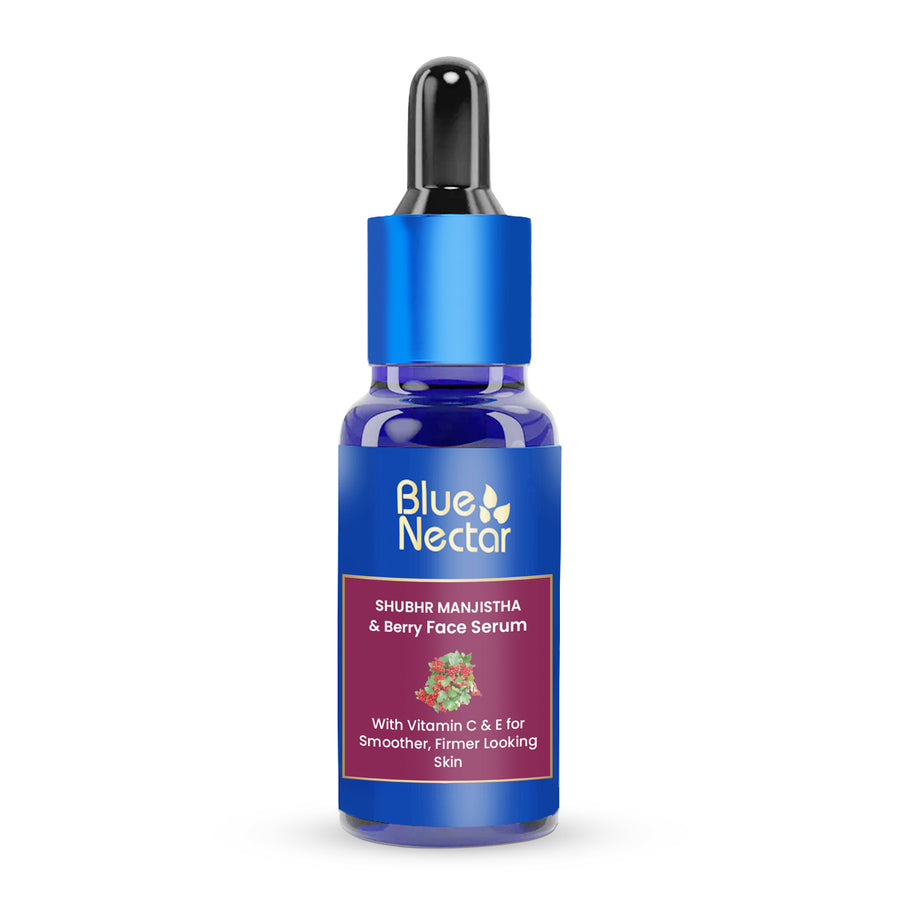
Manjistha & Berry Anti Aging Face Serum for Wrinkles with Vitamin C & E (13 herbs, 30ml)
Plum Oil-Free Face Serum for Acne Marks (8 herbs, 30ml)
Related Articles:
The Complete Guide to Vitamin C: Foods, Science, Skin & Hair
References:
https://www.ipsy.com/blog/skincare-ingredients-to-use-with-vitamin-c
https://www.healthline.com/health/beauty-skin-care/hyaluronic-acid-and-vitamin-c
1 comment
About author

Alfia Shad
About reviewer

Kapil Dhameja
|
Expertise: Specialize in Ayurvedic skincare, SEO Specialist, Traditional Wellness Practices Education: B.tech, MBA Experience: 10 years |


Could you please suggest some products for my combination skin with an oily T-zone? I’m having a hard time finding the right ones that work well for my skin type
Leave a comment