




The Complete Guide to Vitamin C: Foods, Science, Skin & Hair
| Estimated Reading Time: 8 minutes |
Let's start with a confession. Most of us think we know Vitamin C. It's the thing our mothers pushed at us the moment we sneezed, the wedge of lemon in our nimbu paani, the reason oranges feel like a small act of self care. But somewhere between the kitchen and the skincare aisle, Vitamin C picked up a second life. It's now sitting in serums, getting compared to steroids by random Instagram accounts, and starring in "does it even work" debates in every beauty group chat.
Table of Content: |
Where does it actually come from in nature? How much do you really need? What does it do inside your body versus what a serum does on your skin? Is there any truth to the steroid rumour? And does it genuinely do anything for hair, or is that just wishful thinking? We're answering all of it here, along with a few other active ingredients that show up alongside Vitamin C all the time, so you know exactly what you're picking up and why, whether you're standing in a pharmacy or a farmer's market.

What Vitamin C Actually Is
Here's the textbook answer first, and then the human one.
Chemically, Vitamin C is ascorbic acid. It's a water soluble vitamin, which basically means your body doesn't store it away for later like it does with Vitamin D or E. Whatever you consume gets used fairly quickly, and the extra gets flushed out. No stockpiling, no drama, just a steady daily requirement.
Here's the part that surprises people. Humans are one of the very few mammals that cannot make their own Vitamin C. Most animals produce it internally through a chain of enzymes in the liver. Somewhere in our evolutionary past, we lost the gene that does this (it's called GULO, if you want to impress someone at a dinner party). Which means every bit of Vitamin C in your body has to come from what you eat or apply. There's no backup system.
Once it's in your body though, it earns its keep. It's a cofactor for enzymes that build collagen, it helps your immune cells do their job, it supports wound healing, and it improves how much iron you absorb from plant based foods like spinach and lentils. Skip it for long enough and you end up with the classic deficiency symptoms: fatigue, bleeding gums, slow healing wounds, and in extreme, prolonged cases, scurvy, the disease that famously plagued sailors for centuries.
The Science: What Vitamin C Does Inside Your Body
Let's get a bit more specific, because this is where the "why" behind all the skin and hair benefits actually lives.
It's a cofactor for collagen synthesis. Collagen is the structural protein that holds your skin, joints, blood vessels, and hair follicles together. But your body can't build stable collagen without Vitamin C. It's required by two enzymes, prolyl hydroxylase and lysyl hydroxylase, that stabilize the collagen molecule's triple helix structure. No Vitamin C, no properly formed collagen. This single fact explains almost everything else on this list, from firmer skin to stronger hair roots.

It's an antioxidant. Your body is constantly exposed to free radicals, unstable molecules generated by UV rays, pollution, stress, and normal metabolism. Left unchecked, free radicals damage cell membranes and DNA, which is a big part of what we call oxidative stress and, eventually, visible ageing. Vitamin C neutralizes these free radicals by donating an electron to stabilize them, essentially taking the hit so your cells don't have to.
It supports immune function. Vitamin C accumulates in white blood cells and helps them move toward sites of infection and destroy pathogens more effectively. It also helps maintain the skin barrier, which is your first line of defense against anything trying to get in.
It improves iron absorption. Non heme iron, the kind found in plant foods, is harder for the body to absorb than the iron in meat. Vitamin C converts it into a form that's easier to take up, which is why pairing spinach with a squeeze of lemon isn't just a flavor choice, it's genuinely useful.
None of this is influencer science. It's the kind of thing you'll find in a basic biochemistry textbook, and it's the reason Vitamin C keeps showing up in conversations about immunity, skin, and hair even though those seem like three unrelated topics.
Nature's Vitamin C Hit List
Oranges get all the credit, and fair enough, they've earned it. But the truth is that Vitamin C is spread generously across the plant kingdom, and some of the best sources aren't citrus fruits at all.
-
Citrus fruits: Oranges, lemons, limes, and grapefruits are the reliable classics. A single medium orange in the morning goes a long way.
-
Berries: Strawberries, blueberries, raspberries, and blackberries are genuinely rich in Vitamin C, not just antioxidants in general. Strawberries in particular punch above their weight.
-
Tropical fruits: Kiwi, mango, papaya, and pineapple all bring solid amounts. Gram for gram, a kiwi can actually contain more Vitamin C than an orange.

-
Bell peppers: This is the one most people underestimate. Red and yellow peppers carry more Vitamin C than citrus fruits, whether you eat them raw in a salad or roasted.
-
Leafy greens: Kale, spinach, and Swiss chard contribute Vitamin C quietly, while you're busy appreciating their iron and fibre.
-
Cruciferous vegetables: Broccoli and Brussels sprouts bring Vitamin C along with a solid dose of fiber. Roasting them lightly keeps most of the vitamin intact.
-
Herbs: Parsley, thyme, and cilantro aren't just garnish. A spoon of chopped parsley on your eggs is a small but real contribution.
None of these require a special trip or a fancy grocery run. A smoothie with berries and spinach, a handful of bell pepper strips at lunch, or a kiwi as an afternoon snack will get you most of the way there without any effort.
How Much Vitamin C Do You Actually Need
The Recommended Dietary Allowance (RDA) for most adults falls between 65 and 90 mg a day. Men generally need slightly more than women, smokers need more still (about 35 mg extra, since smoking depletes Vitamin C faster), and pregnant or breastfeeding women have higher requirements too. Here's how some common foods measure up against that target.
|
Food |
Typical Serving |
Approx. Vitamin C |
|
Orange |
1 medium (~130g) |
~70 mg |
|
Strawberries |
1 cup (~150g) |
~85 mg |
|
Kiwi |
1 medium (~70g) |
~64 mg |
|
Red bell pepper |
1 cup raw (~150g) |
~190 mg |
|
Broccoli |
1 cup cooked (~90g) |
~80 mg |
|
Papaya |
1 cup (~140g) |
~88 mg |
|
Guava |
1 fruit |
~125 mg |
|
Kale |
1 cup raw (~20g) |
~20 mg |
As you can see, hitting the RDA doesn't take much. One orange with breakfast and a handful of bell peppers at lunch will usually cover the day comfortably, and often overshoot it. Your body absorbs Vitamin C efficiently up to a point, but caps out at around 200 mg per single dose, meaning piling your plate sky high doesn't translate into extra benefit. It just means more of it gets flushed out.
If you're wondering where the line between “enough” and “too much” actually falls, the answer is a little more nuanced than simply taking more because your body can flush it out.
Food vs Supplements: The Showdown
This is a genuinely useful question, and the honest answer is that both work, but they're not doing the same job.
Eating your Vitamin C gets you the whole package. Fruits and vegetables bring fibre, other vitamins, minerals, and plant compounds along with the ascorbic acid, which is part of why a diet rich in produce is linked to so many broader health benefits. The trade off is that Vitamin C content varies with ripeness, storage, and cooking method. Heat and prolonged storage both degrade it, so a wilted, overcooked vegetable delivers far less than a fresh one.

Supplements offer a concentrated, consistent dose. They're useful if your diet is genuinely lacking, if you're travelling, or if you just need convenience. But they're a solo act: no fiber, no accompanying nutrients, just the vitamin itself. Very high doses (mega dosing on 1,000 mg or more) don't create extra benefit either, your body simply excretes what it can't use, and in some people it can cause an upset stomach.
For most people eating a reasonably varied diet, food wins on almost every count except raw convenience. Supplements have their place when diet genuinely falls short, but they're not a replacement for actually eating the fruit.
Is Vitamin C a Steroid? Let's Settle This
This question keeps doing the rounds on social media, usually from an account confidently telling you that Vitamin C serum is "basically a steroid" for your skin. It's worth addressing directly, because the two substances aren't even in the same category of molecule.
Steroids are a class of hormones, some produced naturally by your body (like cortisol), and some synthetic (like the corticosteroids prescribed for inflammation, or anabolic steroids used to build muscle). Structurally, they're built around a four ring carbon skeleton, and they work by binding to specific receptors inside cells, switching genes on or off and altering how your body functions. That's powerful stuff, which is exactly why steroids are prescription controlled and come with real risks when misused: skin thinning, hormonal disruption, mood changes, and more.
Vitamin C, on the other hand, is a simple, water soluble organic compound with a completely different structure. It doesn't bind to hormone receptors, it doesn't switch genes on or off, and it isn't hormone like in any sense. Its job in the body is to donate electrons (as an antioxidant) and to act as a cofactor for specific enzymes (like the ones that build collagen). That's a fundamentally different mechanism from anything a steroid does.
So where did the confusion come from? Probably because both can visibly change skin, steroids by suppressing inflammation and redness quickly (often temporarily, and with downsides if overused), and Vitamin C by supporting collagen and fighting oxidative damage gradually, over weeks. Same general territory (skin appearance), completely different tools. One is a bossy short term fix with real risks. The other is a slow, steady worker with an excellent safety profile. Calling them the same thing is a bit like calling a diesel engine and a bicycle the same because they both help you get somewhere.
The short version: no, Vitamin C is not a steroid, and no legitimate dermatologist or scientist treats it as one.
Vitamin C on Your Skin: How Topical Application Works
This is where the science gets genuinely interesting, because what Vitamin C does when you eat it and what it does when you apply it to skin are related, but not identical.
When you eat Vitamin C, only a small fraction of it ends up reaching the outer layers of your skin. Think of it like watering a large garden from one tap, some of it reaches the far corners, most of it gets used elsewhere first. Topical application, by contrast, delivers Vitamin C directly to the skin barrier, which is why serums can produce more visible, faster results for concerns like dullness and pigmentation.

How it works on skin:
-
Collagen support, locally. Just as it does internally, topical Vitamin C activates the enzymes needed to build and stabilize collagen, which is why consistent use is linked to firmer, more resilient looking skin over time.
-
Antioxidant defense against UV and pollution. Applied Vitamin C helps neutralize free radicals generated by sun exposure and environmental stressors before they damage skin cells. This is why it's often recommended as a morning step, layered under sunscreen rather than as a replacement for it.
-
Pigmentation control. Vitamin C inhibits an enzyme called tyrosinase, which is involved in melanin production. This is the mechanism behind its reputation for fading dark spots and evening out tone.
A few practical realities worth knowing:
-
Pure ascorbic acid is unstable. It oxidizes when exposed to light and air, which is why it's usually sold in dark, airtight packaging, and why an opened bottle that's turned brownish or orange has likely lost potency.
-
Most well formulated serums use concentrations between 10 and 20%. Higher isn't automatically better, and can increase the chance of irritation on sensitive skin.
-
Results take time. Clinical studies looking at daily topical Vitamin C use over about three months have shown meaningful reductions in fine lines and improvements in skin texture, but nobody should expect an overnight transformation. This is a slow, cumulative process, closer to physiotherapy than a quick fix.
Food vs Skincare: Do You Need Both?
So if eating Vitamin C rich food builds collagen from the inside, and applying it targets the skin surface directly, do you actually need both?
Here's a useful way to think about it. Dietary Vitamin C is the foundation, it supports collagen production throughout your body, keeps your immune system running, and contributes to overall skin health over the long run. Topical Vitamin C is the finishing work, it delivers a concentrated, targeted dose exactly where you want visible results, like brightening or evening out tone on your face.
A few myths worth clearing up:
1. Myth: You can't get enough Vitamin C from food alone.
Reality: A varied diet with peppers, berries, citrus, and greens easily covers your daily requirement and then some.
2. Myth: Vitamin C serums work overnight.
Reality: They typically take several weeks of consistent use to show visible change, and only if the formula is stable (check for dark packaging and a fresh, not brownish, color).

3. Myth: More Vitamin C is always better.
Reality: Beyond a certain point, extra Vitamin C from food or supplements just gets excreted. On skin, higher concentrations can mean more irritation, not more benefit.
4. Myth: Topical Vitamin C doesn't really do anything.
Reality: There's solid clinical evidence behind its ability to brighten skin, support collagen, and reduce the appearance of fine lines and pigmentation when used consistently.
The two aren't in competition. Eating well gives your body what it needs to build healthy skin from within. A good serum gives your skin a direct, concentrated boost exactly where you want it. Doing both isn't overkill, it's just covering your bases.
Vitamin C for Hair: Does It Actually Help?
Hair care conversations tend to focus on biotin, keratin, and oils, but Vitamin C deserves a seat at that table too, and the reasoning traces back to the same biochemistry we covered earlier.
Why it matters for hair:
-
Collagen, again. Hair follicles rely on collagen for structural support. Without adequate Vitamin C, follicles can weaken, which is one contributing factor in hair that feels fragile or sheds more than usual.
-
Keratin production. Keratin, the protein that makes up the bulk of your hair strand, requires certain amino acids to be properly synthesized, and Vitamin C plays a supporting role in that process. Low intake over time can leave hair looking dull or brittle.
-
Iron absorption. Hair follicles are sensitive to oxygen and nutrient supply, both of which depend partly on healthy iron levels. Since Vitamin C improves absorption of plant based iron, it indirectly supports the blood supply your scalp needs.
-
Antioxidant protection for the scalp. Pollution and UV exposure generate free radicals on the scalp just as they do on facial skin, contributing to irritation and a less hospitable environment for healthy hair growth. Vitamin C's antioxidant action applies here too.
Signs your hair might be asking for more Vitamin C: unusual dryness or breakage, slow or stalled growth, more shedding than usual, and a dull, flat appearance despite a decent hair care routine. These aren't definitive proof of a deficiency on their own (plenty of other factors affect hair health too), but they're worth paying attention to alongside your diet.
Practical ways to use it:
-
Through food, which remains the most reliable route: citrus fruits, berries, bell peppers, spinach, kale, and guava all work well folded into regular meals.
-
Through simple at-home remedies, ingredients like amla, orange peel, papaya, and other Vitamin C-rich foods can also find their way into occasional skincare rituals. The key is knowing how to use them safely, since homemade Vitamin C doesn't behave quite like a formulated serum.
-
Through Ayurveda, amla (Indian gooseberry) is one of the richest natural sources of Vitamin C and has been used for centuries in hair oils, powders, and rinses. A warm amla oil scalp massage or an amla powder hair mask are both simple, low effort ways to bring this into a routine.
-
Through topical hair products, serums and tonics formulated with Vitamin C or Vitamin C rich botanicals can support scalp health directly, similar to how a face serum works on skin.

A quick word of caution: topical Vitamin C, whether from a product or a DIY citrus rinse, can occasionally cause tingling or irritation on sensitive scalps, and citrus juice is mildly acidic enough to lift hair color slightly with sun exposure. Neither is dangerous, but a patch test before going all in is a sensible habit.
Vitamin C's Best Friends: Other Active Ingredients Worth Knowing
Vitamin C rarely works alone in a good skincare or haircare routine. And once you start combining it with other actives, the order you apply them and which ones you use together starts to matter. Here's a quick, honest rundown of the actives it's most commonly paired with, and why.
Niacinamide (Vitamin B3). Often mentioned as something you shouldn't combine with Vitamin C, though modern formulations have largely made that concern outdated. Niacinamide strengthens the skin barrier, regulates oil production, and helps fade pigmentation through a different mechanism than Vitamin C. Used together (either layered or in the same product), they tend to complement rather than cancel each other out.
Hyaluronic Acid. A humectant that draws moisture into the skin and holds it there. Vitamin C can be slightly drying for some skin types, especially at higher concentrations, so pairing it with hyaluronic acid helps balance that out and keeps skin plump rather than tight.
Retinol. Works on skin renewal and collagen production through a different pathway than Vitamin C, generally at night, since it can increase sun sensitivity. Many routines use Vitamin C in the morning (for antioxidant protection through the day) and retinol at night (for renewal while you sleep), which avoids potential irritation from layering both at once.
Salicylic and Glycolic Acid. These exfoliating acids clear away dead skin cells and unclog pores, which can actually help Vitamin C absorb more effectively afterward. That said, using strong acids and Vitamin C in the same routine calls for a bit of care, since combining exfoliation with an already active ingredient can be more than sensitive skin wants to handle at once.
Squalene. A lightweight, skin identical oil that seals in moisture without feeling heavy. It's a good finishing step after a Vitamin C serum, especially for anyone whose skin runs dry.
None of this means you need every single one of these in your cabinet. But understanding how they relate to Vitamin C makes it much easier to build a routine that actually works together instead of one that's just a random collection of trending ingredients.
How to Get the Most Out of Vitamin C
A few practical habits go a long way, whether you're focused on food or skincare.
For food:
-
Choose fruits and vegetables at peak ripeness, since that's when Vitamin C content is highest.
-
Eat them raw when you can. Cooking, especially boiling, breaks down a meaningful amount of the vitamin.
-
Store produce in cool, dark conditions to slow that breakdown.
-
Pair Vitamin C rich foods with plant based iron sources like spinach or lentils to boost absorption.
-
Don't let cut fruit sit around too long. Vitamin C starts degrading the moment it's exposed to air.
For skincare:
-
Store your serum in a cool, dark place, away from direct sunlight and heat.
-
Check the color before each use. A fresh Vitamin C serum is usually pale yellow. If it's turned dark amber or brown, it has oxidized and lost much of its effectiveness.

-
Apply it to clean, dry skin, ideally in the morning, followed by sunscreen.
-
Give it time. Most people need six to twelve weeks of consistent use before seeing a real difference.
-
Patch test any new product, especially if you have sensitive skin.
Quick Q&A
1. Can you overdose on Vitamin C from food?
Not really. Your body simply excretes what it doesn't need. Supplements in very high doses can occasionally cause stomach discomfort, but this isn't a concern with whole foods.
2. Does frozen fruit still count?
Yes. Berries and vegetables frozen at peak ripeness generally retain most of their Vitamin C content, sometimes more than produce that's travelled a long way and sat around before reaching your kitchen.
3. Is Vitamin C serum safe to use every day?
For most skin types, yes, once a day, typically in the morning. Those with very sensitive or reactive skin may want to start every other day and build up gradually.
4. Can Vitamin C really help with hair fall?
It can support the underlying biology, collagen for follicle strength, better iron absorption, antioxidant protection for the scalp, but it isn't a standalone cure for hair fall, which often has multiple causes. Think of it as one useful piece of a bigger picture rather than a silver bullet.
5. Is Vitamin C a steroid?
No. They're structurally and functionally unrelated. This one comes up often enough that it's worth repeating clearly.
Wrapping It Up
Vitamin C has earned its reputation the old fashioned way, through decades of solid research, not social media hype. It builds the collagen that keeps skin, joints, and hair follicles strong. It fights off the free radical damage that ages skin faster than it should. It helps your body absorb iron, supports your immune system, and yes, it does genuinely brighten skin and support a healthier scalp when used consistently, whether that's through an orange at breakfast, a serum in your morning routine, or a warm amla oil massage on a lazy Sunday.
It isn't a steroid, it isn't a miracle overnight fix, and it doesn't need to compete with food, sunscreen, or other actives like niacinamide and hyaluronic acid. Used sensibly and consistently, it's simply one of the most well understood, well studied ingredients available to you, whether you're reaching for a piece of fruit or a bottle from your shelf.
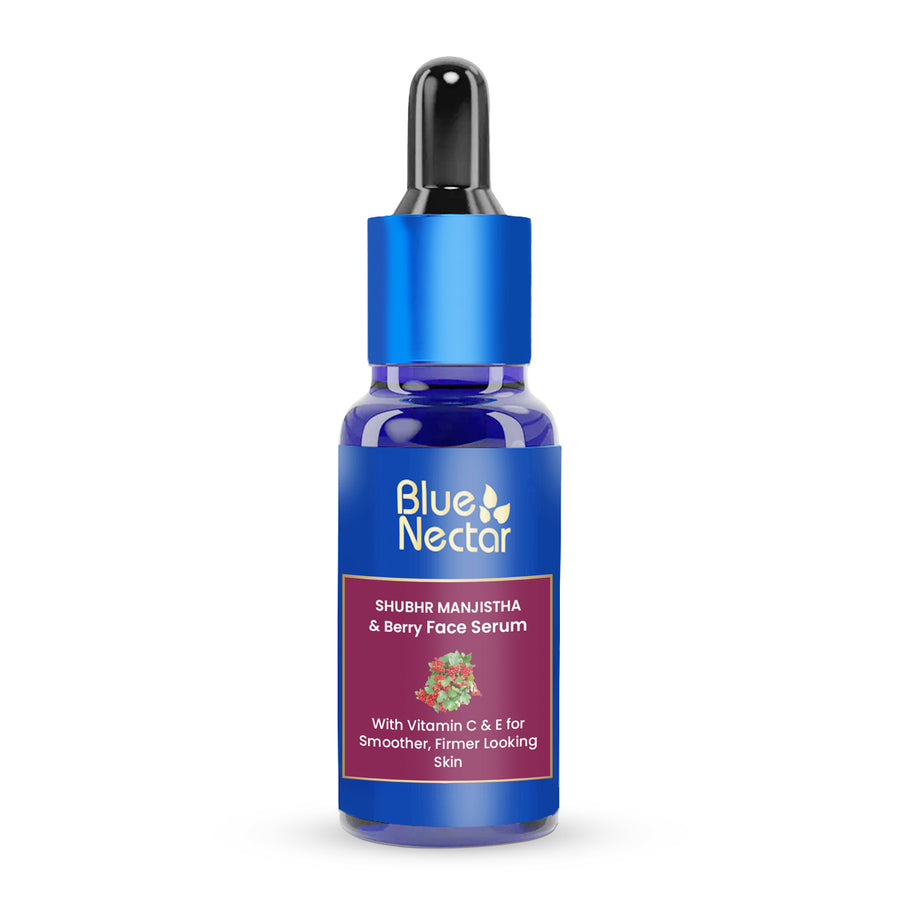
Recommended Products by Blue Nectar:
Related Articles:
How to Layer Vitamin C with Other Actives
Home made Skincare Products using Natural Vitamin C
Hyaluronic Acid Serum Benefits: Hydration, Plumping and More
References:
https://medlineplus.gov/ency/article/002404.htm
https://www.doctorkatta.com/post/2018/10/04/vitamin-c-and-the-science-of-skin-care-the-benefits-vs-the-hype
https://my.clevelandclinic.org/health/articles/23089-collagen
https://www.healthline.com/nutrition/vitamin-c-foods
https://ods.od.nih.gov/factsheets/VitaminC-HealthProfessional/
https://www.webmd.com/a-to-z-guides/ss/slideshow-steroids-101
https://pmc.ncbi.nlm.nih.gov/articles/PMC5605218/
https://pmc.ncbi.nlm.nih.gov/articles/PMC5605218/
https://therootmd.com/blogs/news/vitamin-c-benefits-for-hair
1 comment
About author

Alfia Shad
About reviewer

Kapil Dhameja
|
Expertise: Specialize in Ayurvedic skincare, SEO Specialist, Traditional Wellness Practices Education: B.tech, MBA Experience: 10 years |


very informative
Leave a comment